Yartung Festival: Horse Races at the Top of the World in Nar Phu Valley
Every August, the villages of Nar and Manang come alive with thundering hooves, colorful riders, and centuries-old traditions during the Yartung Festival — one of the highest-altitude horse races on earth. Here is what this extraordinary celebration is really like.
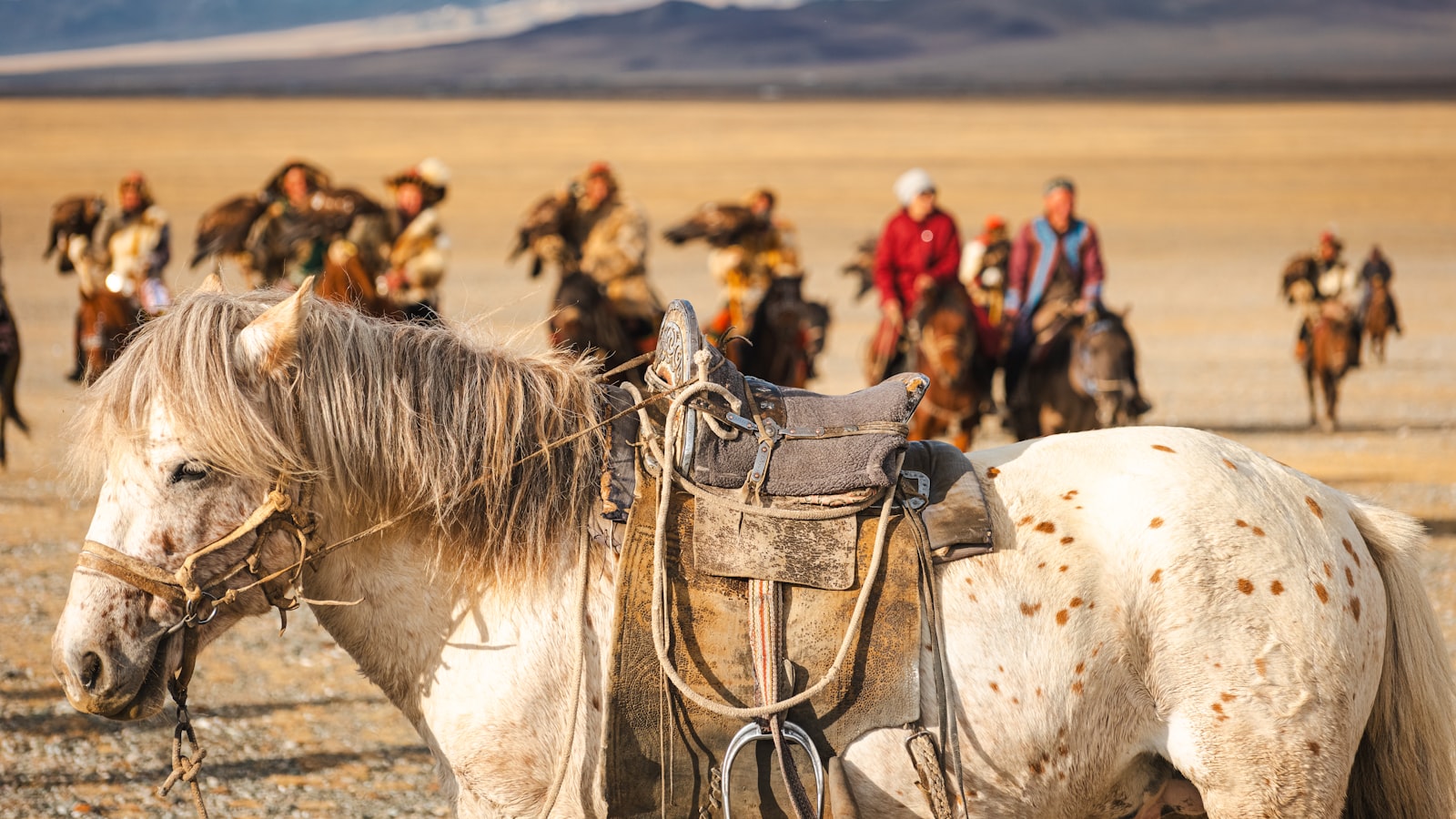
The first time I watched the Yartung horse races in Manang, I could not quite believe what I was seeing. A rider in full traditional dress — heavy wool coat, embroidered hat, boots worn smooth from years of use — was galloping flat out across terrain that most people would hesitate to walk across. The horse was small and sturdy, a Tibetan breed barely fourteen hands high, decorated with ribbons braided into its mane and colored cloth draped across its flanks. The rider leaned from the saddle at full speed, swept a white silk khata scarf from the ground in one fluid motion, and the crowd erupted.
No helmets. No safety equipment. No flat, manicured racetrack. Just horse, rider, and the rocky high-altitude terrain of the Manang Valley at 3,500 meters. This is Yartung, and there is nothing quite like it anywhere else in the world.
What Is Yartung?
Yartung is an annual festival celebrated in the Manang district of Nepal, primarily by the communities of Nar, Phu, and the broader Manang valley. The name comes from two Tibetan words: "Yar" meaning summer and "Tung" meaning to let go or release. It marks the end of summer and the transition into autumn — a moment when the hardest work of the farming and herding season is done, and communities can gather to celebrate.
The festival falls annually in August, typically during the full moon period that coincides with Janai Purnima (the sacred thread festival in broader Hindu/Nepali tradition). It lasts three days, though the intensity of celebration varies from village to village.
Yartung is not a tourist event. It was not created for visitors, and its continued existence has nothing to do with the trekking industry. It is a genuine, living tradition that the people of this region have maintained for centuries — a fact that makes witnessing it significantly more meaningful than attending a cultural show organized for foreign consumption.
The Horse Races
The horse races are the centerpiece of Yartung, and they are unlike any equestrian event you have ever seen.
The Course
There is no prepared track. The "racecourse" is simply the available terrain near the festival ground — rocky meadows, uneven pastureland, the natural contours of the high valley. The course is marked out informally, and every race is essentially point-to-point across whatever ground lies between start and finish.
At elevations between 3,500 and 4,100 meters, both horses and riders are operating with roughly 60% of sea-level oxygen. This limits burst speed but rewards endurance and sure-footedness — qualities that the local Tibetan horses have been bred for over centuries.
The Horses
The horses of Manang and Nar Phu are descendants of Tibetan breeds, compact and powerful with thick coats, strong legs, and an almost supernatural ability to navigate rocky terrain at speed. They are not tall or elegant by Western standards, but they are extraordinarily tough.
Before the races, horses are groomed and decorated with elaborate care. Colorful ribbons are braided into manes and tails. Cloth in red, blue, yellow, and white — the colors of the five elements in Tibetan Buddhism — is draped across their bodies. Bells are sometimes attached to the bridle, so the sound of the race is a mix of hoofbeats, bells, and the roaring crowd.
These are not racing specialists. For most of the year, these same horses carry loads along mountain trails, transport supplies to remote pastures, and serve as the primary form of transportation in a landscape without roads. Racing is their annual moment in the spotlight.
The Riders
Riders are typically young men from the local communities, though the tradition is open to anyone with a horse and the courage to ride it at speed across uneven mountain terrain. They dress in traditional clothing — heavy chuba coats, embroidered hats, leather boots — and ride without modern safety equipment.
The most impressive display of skill comes from riders who perform the khata pickup — leaning from the saddle at full gallop to snatch a silk scarf (khata) from the ground. This requires extraordinary balance, timing, and trust between horse and rider. A mistake at that speed on that terrain would have serious consequences.
Winners earn community respect, bragging rights for the year, and sometimes small prizes. But Yartung racing is not about money. It is about demonstrating the skills that were once essential for survival in the high Himalayas — horsemanship, courage, and the ability to move quickly through difficult terrain.
Beyond the Races
While the horse races are the headline event, Yartung is a multi-day celebration that encompasses much more.
Archery Competitions
Archery has deep roots in Tibetan culture, and the Yartung archery competitions are taken seriously. Participants use traditional bows and compete at targets set up on the festival ground. The archery is social as much as competitive — participants sing, joke, and drink chang (fermented barley beer) between rounds.
Music and Dance
Traditional music fills the festival grounds throughout the three days. Musicians play drums, cymbals, and long Tibetan horns. Groups perform circle dances that have been passed down through generations — men and women moving in coordinated patterns, singing songs that tell stories of mountain life, love, seasonal change, and the spirits of the landscape.
The dancing is participatory, not performative. People join in as they feel moved to, and the circles grow and shrink throughout the day. Watching from the sidelines, you are likely to be beckoned in by a smiling participant. My advice: go with it. The steps are not complicated, and the warmth of being included is one of Yartung's gifts.
Communal Feasting
Food is central to the celebration. Families prepare traditional dishes and share them communally:
- Tsampa (roasted barley flour) mixed into various preparations
- Thukpa (noodle soup with yak meat and vegetables)
- Momos (dumplings, often filled with yak meat)
- Sel roti (ring-shaped fried bread)
- Dried yak meat and cheese
- Chang — lots of chang. The fermented barley beer flows freely during Yartung, and refusing a cup offered by a local host is considered impolite.
The communal eating is as important as the food itself. Yartung is one of the few times each year when people from scattered settlements across the valley gather in one place. Families separated by hours of mountain walking reconnect. News is shared. Marriages are discussed. Business is conducted. The social fabric of the community, stretched thin by the distances of mountain life, is rewoven during these three days.
Religious Ceremonies
Buddhist monks from the local monasteries perform pujas (prayer ceremonies) throughout the festival, blessing the community, the livestock, and the harvest. Incense burns at stone altars, prayer flags are renewed, and offerings are made at the local gompa.
The religious elements are woven seamlessly into the secular celebrations. There is no separation between the sacred and the festive — the same people who race horses in the morning pray at the monastery in the afternoon. This integration reflects the Tibetan Buddhist worldview, which sees spiritual practice not as something separate from daily life but as an expression of it.
Yartung in Nar Village
While the grandest Yartung celebrations take place in the larger settlements of the Manang valley, Nar village has its own celebration that, for those who witness it, is even more intimate and moving.
The Nar Yartung is smaller in scale but identical in spirit. The natural amphitheater that surrounds the village provides a dramatic setting — races and games take place on the valley floor below the settlement, with the golden rock walls curving overhead and the surrounding peaks framing the scene.
Because Nar is smaller (approximately 300 permanent residents), the atmosphere is more familial. Everyone knows everyone. The children running between the stalls, the old men watching from stone walls, the women preparing food — they are all connected by family ties and the shared experience of life at 4,100 meters.
If you have the flexibility to time your trek for early August and the festival is happening (dates shift slightly each year based on the lunar calendar), the experience of being in Nar during Yartung is something I cannot recommend highly enough. You will be welcomed with characteristic high-altitude hospitality — offered tea, chang, food, and a front-row spot to watch the races.
Losar: The Other Great Celebration
Yartung is the summer festival. Losar — Tibetan New Year — is the winter one, and for the people of Nar and Phu, it is the most important celebration of the year.
Losar typically falls in late January or February, depending on the Tibetan lunar calendar. In most years, this puts it outside the trekking season, which means very few outsiders witness it.
The celebration includes:
- Masked dances performed by monks and community members, depicting protective deities and Buddhist narratives
- Fire rituals to purify the community and drive out negative forces from the old year
- New prayer flags raised on every rooftop and at the monastery
- New clothes — families wear their finest handwoven garments, often prepared specifically for the occasion
- Extended feasting that continues over multiple days
- Visiting and gift-giving between households
Losar in Nar or Phu would be an extraordinary experience, but reaching the valley in late January is a serious undertaking. Temperatures drop to minus 20 degrees Celsius, Kang La Pass is typically impassable under snow, and the trail from Koto to Meta can be treacherous with ice. It is possible, but only for experienced winter trekkers with proper equipment and a guide who knows the winter conditions intimately.
The Cultural Significance
Festivals like Yartung and Losar are more than entertainment. In communities as small and isolated as Nar and Phu, they serve essential social functions:
Community bonding. Families who spend much of the year scattered across pastures and lower-elevation winter settlements come together. Relationships are renewed, disputes are resolved, and collective decisions about the coming season are made.
Cultural transmission. The songs, dances, skills, and stories shared during festivals are the primary mechanism by which cultural knowledge passes from one generation to the next. A child watching the horse races learns not just about horsemanship but about what their community values — courage, skill, grace under pressure.
Identity reinforcement. For a community whose language is endangered and whose young people are increasingly drawn to Kathmandu and beyond, festivals are a powerful reminder of who they are and where they come from. The old songs, the traditional dress, the taste of grandmother's tsampa — these sensory anchors tie people to place across distances and generations.
Spiritual renewal. The Buddhist ceremonies that frame the festivals cleanse the community spiritually, reset relationships, and invoke blessings for the season ahead. This is not symbolic — for the people of Nar and Phu, the efficacy of these prayers is as real as the wind on Kang La.
Timing Your Trek for Yartung
If Yartung is something you want to experience, here are the practical details:
- When: August, during the full moon of Janai Purnima. Exact dates shift annually. Check with your trekking agency for the specific date in your travel year.
- Duration: The main celebrations last three days, though preparation and aftermath extend the festive period.
- Weather consideration: August is monsoon season in Nepal. However, Nar and Phu sit in a rain shadow, so the upper valley is often dry even when lower elevations are getting drenched. The trail from Koto to Meta may be wet and slippery, and leeches are present in the forested sections.
- Permits: Standard restricted area permit applies. No additional festival permit is needed.
- Crowds: Even during Yartung, there are very few foreign trekkers. You may be the only outside visitors.
The monsoon season is generally considered off-peak for trekking in Nepal, which means it is actually an excellent time to experience Nar Phu — fewer permits are in demand, the upper valley is dry, and the cultural experience of Yartung is a bonus that few other trekkers ever encounter.
What I Carry Away
I have been present at Yartung celebrations many times, and what stays with me is not any single moment but the cumulative feeling of being welcomed into something old and alive. The rider leaning from his saddle, the old woman singing a song her grandmother taught her, the monk blessing the crowd with juniper smoke, the children chasing each other between the food stalls — all of it speaks to a community that has chosen to keep its traditions not because tourists are watching, but because the traditions are worth keeping.
In a world where so many cultural festivals have become performances for outsiders, Yartung remains the real thing. If your trek timing allows it, do not miss it.