Snow Leopards, Blue Sheep, and Golden Eagles: Wildlife of Nar Phu Valley
Nar Phu Valley is one of the few places in Nepal where snow leopards have been scientifically documented hunting blue sheep across alpine meadows that most trekkers walk right through. Here is what lives in this valley, and how to spot it.
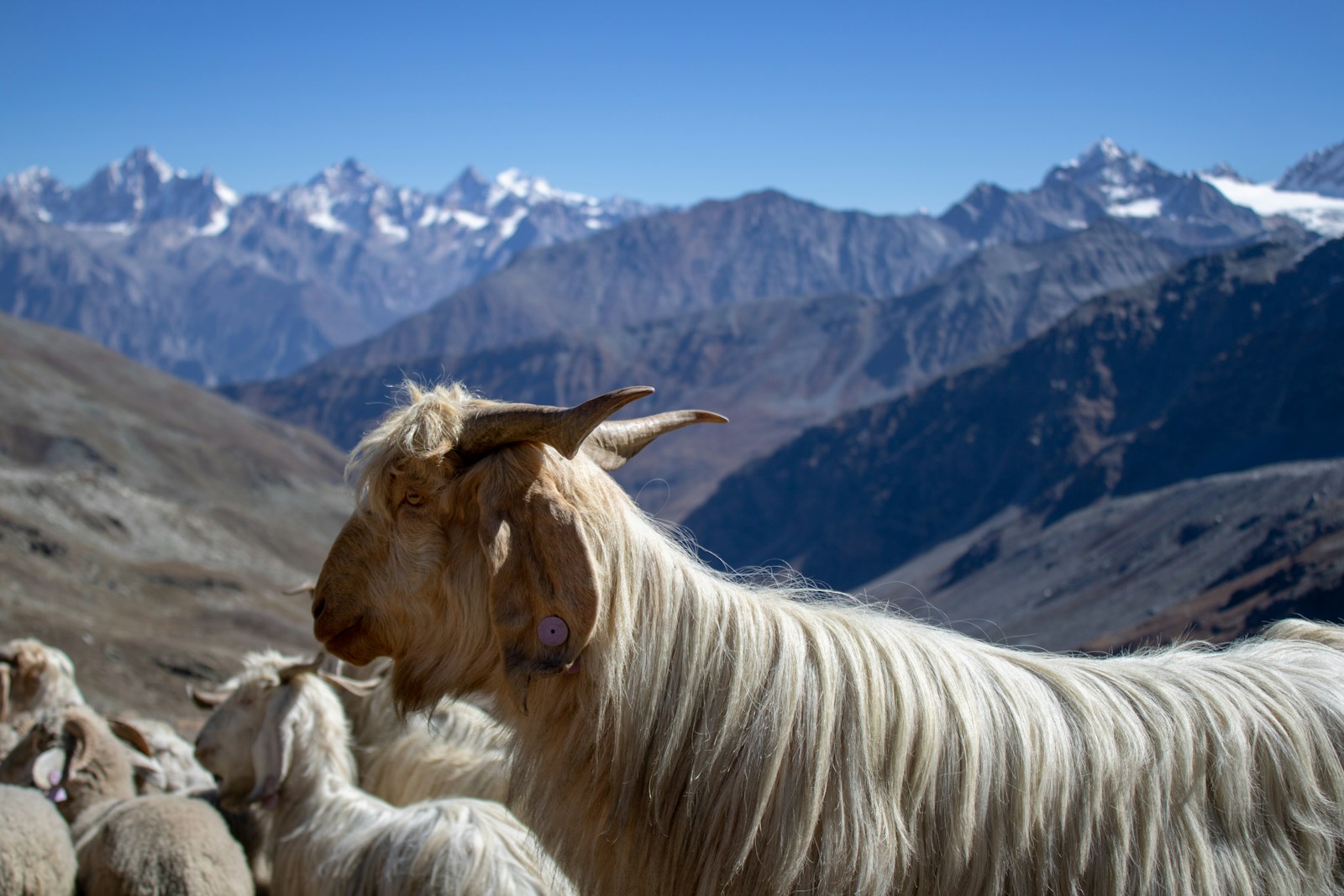
A few years ago, I was guiding a small group through the high meadows above Nar village when I noticed fresh tracks in a patch of snow. Large paw prints, wider than my hand, with no claw marks visible. I knelt down and my heart rate picked up because I knew exactly what had made them. A snow leopard had walked this same path, probably just hours before we did.
We never saw the cat. You almost never do. But knowing it was there — that somewhere on the cliffs above us, one of the rarest and most elusive predators on earth was possibly watching us walk through its territory — changed the entire day. Everyone in the group spent the rest of the trek scanning the ridgelines, binoculars up, hoping for a glimpse of grey fur against grey rock.
That is what wildlife watching in Nar Phu Valley is like. It is not a safari. There are no guarantees. But the valley harbors an extraordinary community of high-altitude species, some of them found in very few other places, and if you know where and how to look, the encounters can be remarkable.
The Snow Leopard: Ghost of the Mountains
Let me be honest: the chances of seeing a snow leopard on a standard Nar Phu trek are very small. These cats are masters of camouflage, typically active at dawn and dusk, and inhabit terrain that humans find nearly impossible to traverse. Estimates suggest there are perhaps 300-500 snow leopards in all of Nepal, spread across thousands of square kilometers of remote mountain habitat.
But here is what makes Nar Phu special: it is one of the few places in the world where snow leopards have been scientifically studied in detail. Research conducted specifically in the Phu Valley confirmed the presence of six individual snow leopards in the study area. The researchers used camera traps, scat analysis, and kill-site examinations to build a detailed picture of how these cats live.
The findings are fascinating:
- Each snow leopard in the Phu Valley kills approximately one domestic livestock animal and two bharal (blue sheep) per month
- Their annual diet consists of roughly 42% livestock and the rest wild prey
- The high proportion of livestock in the diet has created tension with local herders, who lose valuable animals to predation
- Blue sheep (bharal) make up the vast majority of wild prey, at approximately 92% of wild kills
For trekkers, the practical takeaway is this: snow leopards are genuinely present in the areas you walk through, particularly around Phu village and the high ridges between Nar and Kang La. The best times for a sighting are the first and last hours of daylight, and the most productive technique is to sit quietly at a high vantage point with binoculars and scan the cliffs systematically.
I have been guiding in this valley for years, and I have seen a snow leopard exactly twice. Both times, it was at dawn, both times from a considerable distance, and both times the animal disappeared within seconds of me spotting it. If you see one, consider yourself among the most fortunate trekkers in the Himalayas.
Blue Sheep (Bharal): The Valley's Most Visible Wild Mammal
If the snow leopard is the ghost, the bharal (Pseudois nayaur) is the host. These blue-grey mountain ungulates are by far the most commonly seen large wild mammal in Nar Phu Valley, and scientific surveys have recorded their population density at an impressive 8.4 animals per square kilometer.
Blue sheep are misnamed — they are not actually blue, and they are not actually sheep. They are more closely related to goats, and their coloring is a slate grey that can appear bluish in certain light conditions. They inhabit the steep, rocky terrain above 3,500 meters, and they are astonishingly agile on cliff faces that look completely vertical.
Where to see them:
- Cliffs around Nar village amphitheater: This is probably the single best spot. Herds of 20 or more are regularly seen on the rock walls above the village, sometimes so close that you can hear the click of their hooves on stone.
- High meadows between Meta and Phu: The open terrain here provides excellent visibility, and bharal often graze in the early morning.
- Ridge above Nar toward Kang La Phedi: The approach trail to the pass passes through prime bharal habitat.
Behavior to watch for:
Blue sheep are most active in early morning and late afternoon. During midday, they tend to rest on ledges and cliff faces where predators cannot reach them. Males have impressive curved horns that grow throughout their lives, and during the autumn rutting season (November-December), you may see males engaging in dramatic head-butting contests.
The scientific significance of the bharal population in Nar Phu goes beyond simple wildlife watching. Researchers found that snow leopards harvest approximately 15.1% of the bharal population annually, with kids (young animals) making up about 18.4% of the population. This predator-prey dynamic is one of the best-documented examples of snow leopard ecology anywhere in the world.
Himalayan Tahr
Less commonly seen than bharal but present in the valley, the Himalayan tahr (Hemitragus jemlahicus) inhabits the steepest rock faces in the trans-Himalayan zone. Males develop a distinctive shaggy mane and can weigh up to 100 kg.
Tahr tend to favor slightly lower elevations than bharal, typically between 2,500 and 4,000 meters, and prefer cliff faces with some vegetation. You are most likely to spot them as silhouettes on high ridges during the section between Koto and Meta, where the terrain transitions from forest to alpine.
I find that many trekkers confuse tahr with bharal at a distance. The key difference is the mane: adult male tahr have a prominent ruff of hair around the neck and shoulders that bharal lack. Through binoculars, the distinction is clear.
Birds of the High Himalaya
The Annapurna region, which includes Nar Phu Valley, hosts a significant portion of Nepal's 850+ recorded bird species. For trekkers with even a casual interest in birds, the valley offers some spectacular sightings.
Himalayan Monal (Danphe)
Nepal's national bird is one of the most visually stunning pheasants in the world. Males display iridescent plumage that shifts through green, blue, purple, copper, and gold depending on the light angle. They inhabit elevations between 2,100 and 4,500 meters, making the forested sections between Koto and Meta prime Danphe territory.
I see monals most often in the early morning, when they emerge from the forest cover to feed on the open slopes. The males are unmistakable — even at a distance, the metallic flash of their feathers catches the eye. Females are brown and mottled, easily overlooked.
Golden Eagle
Large and magnificent, the golden eagle (Aquila chrysaetos) soars on the thermal currents that form against the heated rock walls of the Nar amphitheater. With a wingspan approaching 2 meters, they are hard to miss when they are circling overhead.
Golden eagles in Nar Phu hunt primarily small mammals — pikas, marmots, and young bharal. Watch the cliffs above Nar and Phu villages during late morning, when thermal updrafts develop and the eagles begin their hunting flights.
Himalayan Griffon Vulture
These enormous birds have wingspans exceeding 2.5 meters and circle at extraordinary heights on thermal columns. They are the cleanup crew of the high mountains, feeding on the carcasses of animals that die from falls, predation, or exposure.
Griffon vultures are a common sight above the Nar amphitheater and along the Phu Khola valley. Their sheer size makes them visible even at great altitude — look for dark silhouettes circling in wide, lazy arcs against the blue sky.
Tibetan Snowcock
A large, plump bird of the high alpine zone, the Tibetan snowcock (Tetraogallus tibetanus) inhabits rocky slopes above 4,000 meters. They are more often heard than seen — their loud, whistling call echoes across the valleys in the early morning.
I hear snowcocks almost every morning in the upper Nar valley. Seeing them requires patience and binoculars, as their brown and grey plumage provides excellent camouflage against the rocky ground.
Other Notable Species
- Lammergeier (Bearded Vulture): Recognizable by its diamond-shaped tail and habit of dropping bones from height to crack them open on rocks below
- Snow pigeon: Flocks wheel across the cliff faces near Nar and Phu
- Grandala: Males are a striking electric blue; common above 3,500m
- Red-billed chough: Noisy flocks circle the settlements, their acrobatic flight instantly recognizable
Yaks: Wild and Domestic
Yaks are everywhere in Nar Phu Valley, and for most trekkers they are the most memorable animal encounter — not because they are rare, but because they are so essential to life here.
Domestic yaks provide milk (for butter, cheese, and the iconic yak butter tea), wool, meat, transportation, and dung for fuel. Without yaks, human settlement at these elevations would likely be impossible. You will see them grazing on the high meadows above Phu and Nar, their shaggy coats swinging as they crop the sparse alpine grass.
Dzos (yak-cattle hybrids) are also common, used for plowing the small barley fields and for carrying loads on lower-elevation trails.
A practical note: yaks have the right of way on the trail. Always step to the uphill side when a yak train passes. Getting nudged off a narrow mountain trail by an 800 kg animal with horns is an experience best avoided.
The Elusive Ones
Several other animals inhabit Nar Phu Valley but are rarely seen by trekkers:
- Himalayan wolf: Present but extremely rare and shy. Some herders report occasional sightings, primarily at dawn.
- Himalayan marmot: These large, ground-dwelling rodents dig burrows in alpine meadows above 3,500 meters. Listen for their sharp, piercing alarm whistle.
- Pika (mouse hare): Tiny, round-eared mammals that dart between rocks in the alpine zone. Quick movements at ground level near boulders are usually pikas.
- Weasels and martens: Various species inhabit the valley but are nocturnal and rarely encountered on the trail.
Wildlife Watching Tips for Nar Phu Trekkers
After years of watching for wildlife in this valley, here is what I have learned:
Timing matters. The first hour after dawn and the last hour before sunset are dramatically more productive than midday. Animals are active, the light is angled (making movement on cliff faces easier to spot), and there is less human activity on the trail.
Stop and sit. The best wildlife sightings come not from walking and scanning, but from finding a good vantage point, sitting down, and waiting. Fifteen minutes of patient observation from one spot reveals far more than an hour of walking with binoculars bouncing around your neck.
Bring proper optics. A pair of lightweight binoculars (8x or 10x magnification) makes an enormous difference. Without them, the bharal on the cliffs above Nar are grey dots. With them, you can see individuals, identify males and females, and watch their behavior in detail.
Listen. Many high-altitude animals are heard before they are seen. The alarm whistle of a marmot, the clatter of hooves on rock, the call of a snowcock — these sounds tell you where to look.
Ask your guide. Local guides know where animals are most commonly seen in each season. We know which water sources bharal visit in the morning, which cliff faces the eagles favor, and which meadows marmots have colonized. Use that knowledge.
Respect distance. This is not a zoo. These animals are wild, and many of them have never seen humans before. Maintain at least 50 meters from any wildlife, and never approach nesting birds or animals with young. The privilege of being in their habitat comes with the responsibility of not disrupting it.
Conservation: The Tension Between Leopards and Livestock
The relationship between snow leopards and the people of Nar and Phu is complicated. Herders lose valuable livestock to snow leopard predation — the research showed that 42% of snow leopard diet in the Phu Valley comes from domestic animals. A single yak can represent months of income for a family already living at the edge of economic viability.
This creates a real conservation dilemma. Snow leopards are critically important to the ecosystem, but asking subsistence herders to bear the economic cost of conservation without compensation is unfair.
Several programs are attempting to address this:
- Livestock insurance schemes that compensate herders for predation losses
- Improved predator-proof corrals to reduce nighttime kills
- Ecotourism programs that channel tourism revenue toward communities affected by predation
- Conservation education programs in local schools
The restricted permit system for Nar Phu indirectly supports these efforts by generating revenue that partly flows to the Annapurna Conservation Area Project (ACAP), which manages conservation in the region.
Why It Matters
Nar Phu Valley is not just a beautiful place to trek. It is a functioning high-altitude ecosystem where the ancient relationships between predators, prey, and human communities are still playing out in ways that have largely disappeared from more accessible parts of the Himalayas.
When you see bharal on the cliffs above Nar, you are seeing the primary food source for one of the world's most endangered cats. When you see yaks grazing in the meadows, you are seeing both a lifeline for human communities and an alternative prey source that shapes snow leopard behavior. When you hear the whistle of a marmot or the cry of a golden eagle, you are hearing the sounds of a food web that has operated at this altitude for thousands of years.
Walking through Nar Phu with this awareness changes the trek. Every cliff becomes a potential observation post. Every track in the snow becomes a clue. And every moment of quiet, patient watching becomes a chance to connect with something genuinely wild.