The History of Nar Phu Valley: From Tibet's Lost Kingdom to Nepal's Hidden Gem
Long before trekkers discovered Nar Phu Valley, it was a thriving outpost of an ancient Tibetan kingdom, connected to the world by yak caravans carrying salt across some of the highest passes on earth. Here is the story of how this extraordinary place came to be.
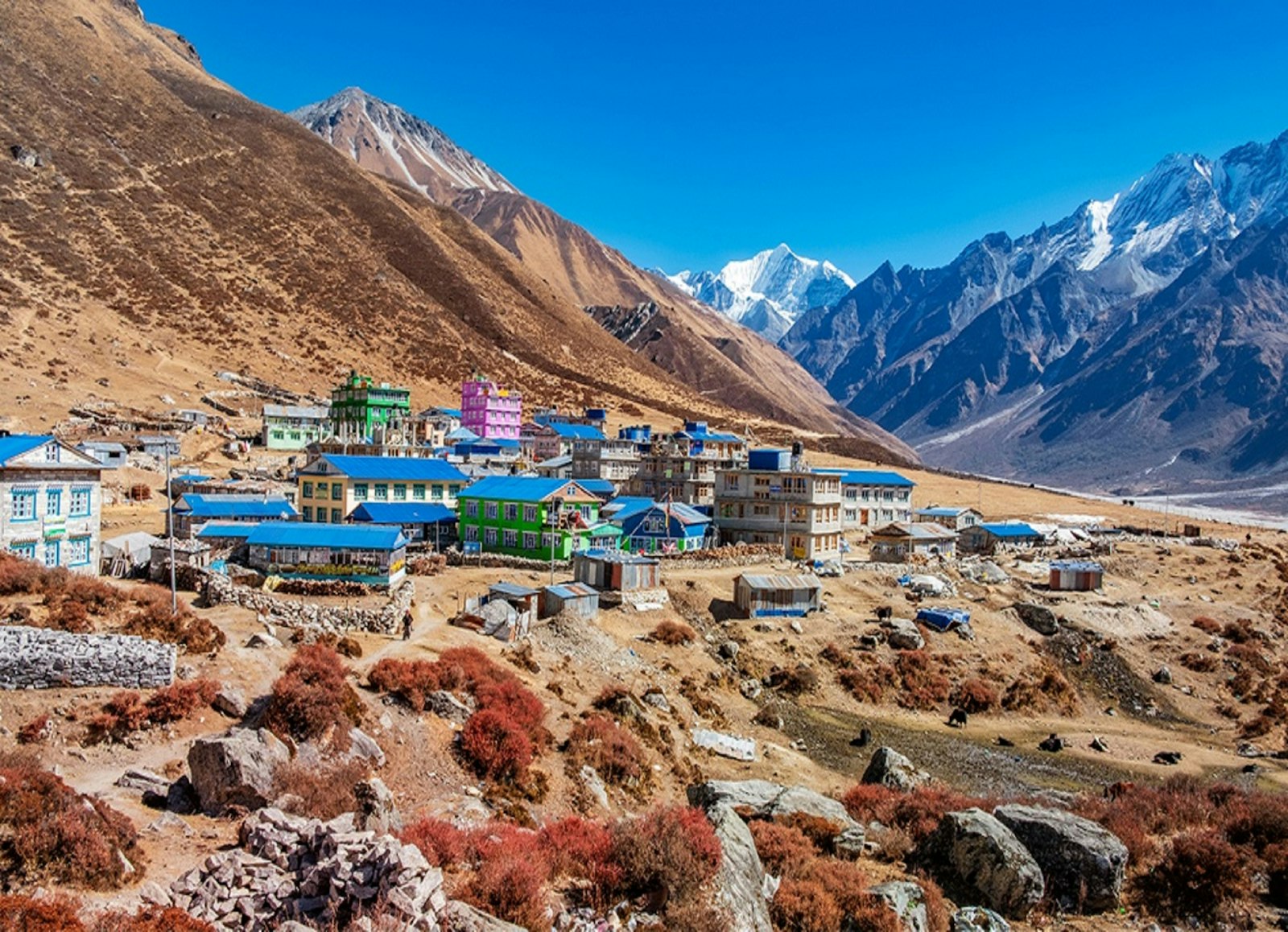
I grew up hearing stories about how the people of Nar and Phu ended up where they are. My grandmother used to say that their ancestors walked here from a kingdom so old that even the mountains have forgotten its name. She was more right than she probably knew.
The history of Nar Phu Valley is not something you will find in thick textbooks or university courses. It lives in the oral traditions of the families who still farm barley at 4,000 meters, in the crumbling manuscripts stored at Tashi Lhakhang Monastery, and in the architecture of stone houses that have sheltered people through centuries of Himalayan winters. Piecing it together requires listening as much as reading.
The Shang Shung Connection
The oldest origin stories of the Nar and Phu people trace back to the Shang Shung Kingdom — sometimes written Zhang Zhung — an ancient civilization that flourished on the Tibetan Plateau long before the Tibetan Empire rose to power. Shang Shung was centered around Mount Kailash in western Tibet and is believed to have existed from at least the 1st millennium BCE until it was absorbed by the Tibetan Empire around the 7th or 8th century CE.
What does a kingdom near Mount Kailash have to do with a tiny valley in northern Nepal? More than you might think.
When the Tibetan Empire expanded and absorbed Shang Shung, waves of migration pushed people southward and eastward. Some of these migrants — particularly from Tibet's Kham province — crossed the high passes of the Himalayas and settled in the sheltered valleys on the Nepal side. The people who eventually founded Nar and Phu are believed to be among these settlers, arriving sometime around the 8th century.
They brought with them the Bon religion, which predates Buddhism in Tibet. Bon is an animistic tradition centered on the worship of nature spirits, mountain gods, and the sacred landscape itself. Traces of this pre-Buddhist worldview are still visible in Nar and Phu today — in the reverence for specific mountain peaks as homes of protective deities, in the burning of juniper as offering smoke, and in certain ritual practices that sit alongside Buddhist worship without any sense of contradiction.
The conversion to Buddhism came later, likely over several generations, as Tibetan Buddhism spread across the Himalayan region. But unlike many places where Buddhism replaced older traditions entirely, in Nar Phu the two belief systems merged. Walk through Nar village today and you will see Buddhist prayer flags next to offerings that would be recognizable to a Bon practitioner from a thousand years ago.
Salt, Wool, and Survival: The Trade Routes
To understand why anyone would build permanent settlements at over 4,000 meters in one of the most remote valleys in the Himalayas, you need to understand the salt trade.
For centuries — possibly millennia — a network of trading routes connected the Tibetan Plateau with the lowlands of Nepal and India. Salt was the currency that made these routes viable. Tibet had vast salt deposits. The lowlands had grain, rice, cloth, and metal tools. The exchange between these two zones created an economy that sustained entire communities along the route.
Nar and Phu villages sat at a critical junction on one of these routes. Traders would bring yak caravans loaded with salt, raw wool, and dried meat south from Tibet, crossing high passes above 5,000 meters. At villages like Nar and Phu, they would rest, resupply, and sometimes trade before continuing south to lower Manang and eventually to the market towns in the middle hills.
On the return journey, the caravans carried rice, barley from lower elevations, cloth, iron tools, and other manufactured goods back toward Tibet. The village of Koto, at the junction of the Nar Khola and the Marsyangdi River, served as the main trading post where goods from the hidden valleys met the broader commercial world.
I have talked to elderly residents of Nar who remember the last of the salt caravans. One man, who must have been in his eighties, described seeing his grandfather lead a train of twenty yaks through the Kang La in autumn, their loads of salt wrapped in yak-hide bundles. "Every family had yaks for trading," he told me. "That was how we lived. The salt kept us alive."
The salt trade declined sharply in the mid-20th century. Modern roads and transportation networks made it cheaper to bring salt from India and the Terai than to carry it over 5,000-meter passes by yak. By the 1960s and 1970s, the economic foundation that had sustained Nar and Phu for centuries was largely gone.
But the cultural impact of the trade remains everywhere. The thick-walled stone houses were designed partly to store trade goods. The linguistic diversity of the Nar-Phu language — which absorbed vocabulary from every trading partner along the route — reflects centuries of commercial contact. And the outward-looking, hospitable character of these communities, despite their extreme geographic isolation, was forged through generations of welcoming traders from distant places.
A Valley the Government Didn't Know Existed
One of the more remarkable stories about Nar Phu Valley involves its "discovery" by the Nepali government. For most of Nepal's history, the central government in Kathmandu had limited awareness of what was happening in the country's most remote northern valleys. Roads were nonexistent. Communication was by messenger on foot. And valleys like Nar Phu were, for all practical purposes, self-governing.
According to local accounts that I have heard from multiple sources, government officials in Chame — the district headquarters of Manang — first became aware of the Nar and Phu settlements when they noticed oddly cut pieces of cloth floating down the Nar Khola River. The fabric was unlike anything produced in the known villages of the Manang district. Curious, officials sent a team upriver to investigate.
What they found was an entire community of several hundred people, living in stone villages at over 4,000 meters, speaking their own language, practicing their own customs, and managing their own affairs — essentially an autonomous society that had existed outside government awareness for generations.
Whether every detail of this story is historically precise, I cannot say. But the core truth it captures is real: Nar Phu Valley was genuinely remote and genuinely unknown to the outside world for most of its history. That isolation is what preserved its character.
The Khampa Guerrillas
There is a chapter of Nar Phu's history that few trekking guides mention, but which left a mark on the valley's recent past.
In the 1950s and 1960s, after China's takeover of Tibet, groups of Khampa guerrilla fighters — Tibetan resistance fighters from the Kham region — used remote Himalayan valleys in northern Nepal as bases for their insurgency against Chinese forces. The village of Kyang, which trekkers pass through on the trail between Meta and Phu, was one such base.
The Khampa presence in the region was complex. They were fighting for Tibetan independence and initially had covert support from the CIA, which saw the Tibetan resistance as a tool in the broader Cold War. For the local people of Nar and Phu, the guerrillas were in some ways kin — they spoke related languages and shared cultural and religious bonds. But the military activity also brought unwanted attention and instability to a valley that had thrived on its obscurity.
The Khampa insurgency in Nepal was eventually suppressed by the Nepali government in the early 1970s, partly under pressure from China. Today, Kyang village is a quiet, largely abandoned settlement where you can still see the stone structures that once housed the fighters. Most trekkers walk through without knowing the history beneath their feet.
Closed Valley, Hidden World
For decades after the Khampa episode, the Nepal government classified the Nar Phu area as a restricted zone. No foreigners were permitted. The restriction was partly security-related — the proximity to the Chinese border made Kathmandu nervous — and partly a reflection of the government's limited ability to manage tourism in such a remote area.
During these closed decades, life in Nar and Phu continued much as it had for centuries. Families herded yaks, planted barley, maintained their monasteries, and celebrated their festivals. The difference was that while the rest of Nepal's trekking regions — the Annapurna Circuit, the Everest region, Langtang — were being transformed by growing numbers of foreign visitors, Nar Phu Valley remained untouched.
This is why trekking in Nar Phu today feels so different from the Annapurna Circuit or Everest Base Camp. Those regions have had fifty-plus years of tourism development. Nar Phu has had barely twenty.
2002: Opening to the World
The Nepal government opened Nar Phu Valley to foreign trekkers in 2002, though actual trekking didn't begin in earnest until 2003 or 2004. The decision was part of a broader effort to distribute tourism revenue beyond the traditional hotspots and to provide economic alternatives for remote communities.
But the opening came with significant restrictions:
- A special restricted area permit is required, costing $100 per person in peak season
- All trekkers must be accompanied by a licensed guide arranged through a registered trekking agency
- A minimum group size of two is required
- The number of permits is limited to roughly 400 per year
These restrictions were deliberate. The government and conservation authorities had watched other trekking regions struggle with the environmental and cultural impacts of mass tourism. The permit system for Nar Phu was designed to generate revenue while keeping visitor numbers at a level the valley's fragile infrastructure and environment could absorb.
Whether the restrictions have been entirely successful is debatable. Some local residents feel that tourism revenue is not reaching them adequately. Others worry about the gradual erosion of traditional practices as young people see alternatives to the herding life. But compared to the transformation of the Annapurna Circuit, where tea shops compete aggressively and trails are being replaced by jeep roads, Nar Phu remains remarkably intact.
The Monasteries: Living Links to the Past
Perhaps the most tangible connection between Nar Phu's past and present is its monasteries.
Tashi Lhakhang Monastery in Phu village is the valley's spiritual anchor. Built over 700 years ago by Lama Urgen Lhundup Gyatso, it is recognized as one of the 108 great Buddhist monasteries worldwide. It has been blessed by both a Karmapa Rinpoche and the 13th Dalai Lama. Today, resident monks maintain daily rituals that have continued essentially unbroken for centuries.
I have sat in Tashi Lhakhang during evening prayers. The butter lamps cast a soft gold light across ancient murals that depict the life of the Buddha and various protective deities. The deep chanting of the monks reverberates off stone walls that have heard the same prayers for seven hundred years. It is one of those experiences where the weight of history is physically palpable.
Nar Gumba, the monastery in Nar village, is smaller but equally important to community life. It serves as a school, a gathering place, and a repository of the village's spiritual heritage. Below Nar village, a small nunnery at Nar Phedi is run by a community of Buddhist nuns who also provide shelter for trekkers.
These are not museum pieces. They are functioning institutions where children are educated, community decisions are debated, and the cycle of Buddhist practice — from morning prayers to evening meditation — continues as it has for generations.
The Language That Almost Disappeared
The people of Nar and Phu speak a language called Nar-Phu (sometimes classified as two closely related dialects, Nar and Phu). It belongs to the Tibeto-Burman language family and is spoken by only a few hundred people — making it one of the most endangered languages on earth.
Nar-Phu is not written down in any standardized form. It lives entirely in speech — in the conversations between neighbors, the stories grandparents tell children, and the prayers recited at household shrines. Linguists who have studied it note that it preserves archaic Tibetan features that have been lost in modern Tibetan dialects, making it a kind of living fossil of how Tibetan was once spoken across a much wider area.
The threat to Nar-Phu is simple: young people are learning Nepali for practical reasons, and some families are sending their children to schools in Manang or Kathmandu where instruction is in Nepali or English. Each generation that grows up away from the valley weakens the chain of transmission.
Several NGOs and linguistic researchers are working on documentation and preservation projects. But the language's survival ultimately depends on whether the community can maintain itself — whether there are enough people living in Nar and Phu, speaking to each other in their mother tongue, to keep the language alive.
What the Future Holds
Nar Phu Valley sits at a crossroads that many remote Himalayan communities face. The forces pulling in different directions are powerful.
On one side: tourism offers real economic opportunity. The permit fees, guiding jobs, teahouse income, and handicraft sales provide alternatives to an agricultural economy that has always been precarious at 4,000 meters. Young people see tourism as a path that lets them stay connected to their home valley rather than migrating permanently to Kathmandu or abroad.
On the other side: every visitor changes the place, however slightly. The construction of teahouses alters village architecture. The demand for trekker-friendly food changes eating patterns. The presence of outsiders with cameras and expectations creates a subtle pressure to perform culture rather than simply live it.
The restricted permit system is, in my view, the single most important factor in Nar Phu's favor. By keeping visitor numbers genuinely low — 400 per year in a valley with fewer than 500 permanent residents — the system ensures that tourism supplements traditional life rather than replacing it. Compare this to villages on the Annapurna Circuit where tourism IS the economy, and the difference is stark.
When I bring trekking groups to Nar and Phu, I try to share this history with them. Not because it makes the scenery more beautiful — the scenery is spectacular regardless — but because understanding where a place comes from changes how you experience it. Those stone houses are not picturesque ruins. They are the homes of people whose ancestors walked here from a lost kingdom, built a life on the salt trade, survived political upheaval, and are now navigating a future that no one in the valley's long history could have predicted.
That is what makes Nar Phu different from almost any other trek in Nepal. It is not just a walk through mountains. It is a walk through a story that is still being written.